Blog
Why Teams Miss Quarterly Goals (And the 3-Part System to Actually Execute Q1 Projects)
Olivia Parkes
7 minutes
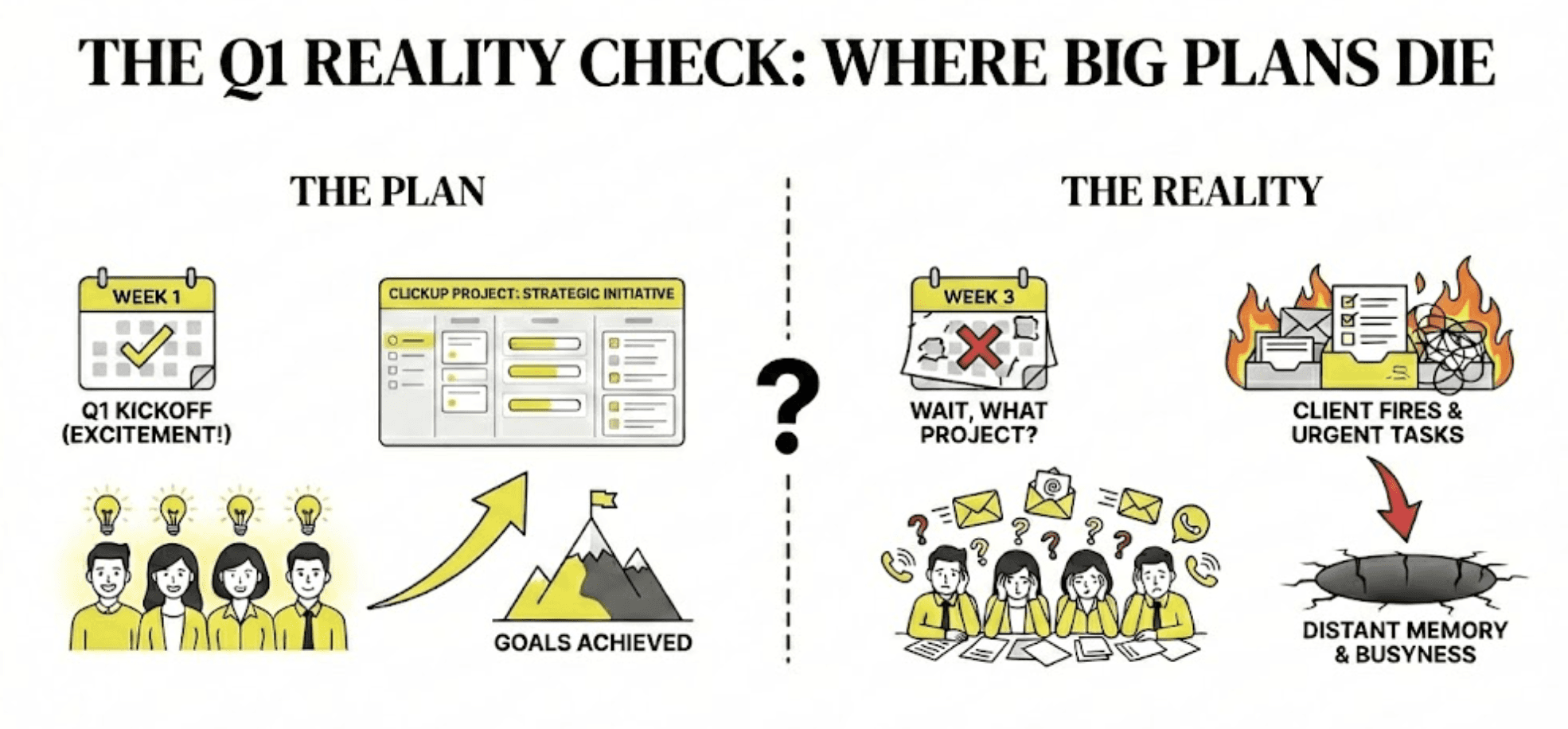
It's week three of Q1.
Your team had big plans. New systems to implement. Strategic initiatives that would actually move the business forward. Everyone was excited in that kickoff meeting.
But if I asked your team right now what progress they've made on those Q1 projects, I'd get blank stares.
Because here's what actually happened:
Week 1: "We'll start next week once things settle down." Week 2: "I've been slammed with client work." Week 3: "Wait, what project were we supposed to be working on?"
By the time Q2 rolls around, those strategic initiatives will be a distant memory. Your quarterly planning meeting will start with "Why didn't we hit any of our goals?" And someone will say "We just got too busy."
But here's the truth:
Your team doesn't lack commitment. They lack a system.
You can't just drop a project in ClickUp and expect it to get done. That's not how human brains work. Important-but-not-urgent work will always lose to whatever's on fire today.
So if you actually want your quarterly projects to happen, you need three things working together:
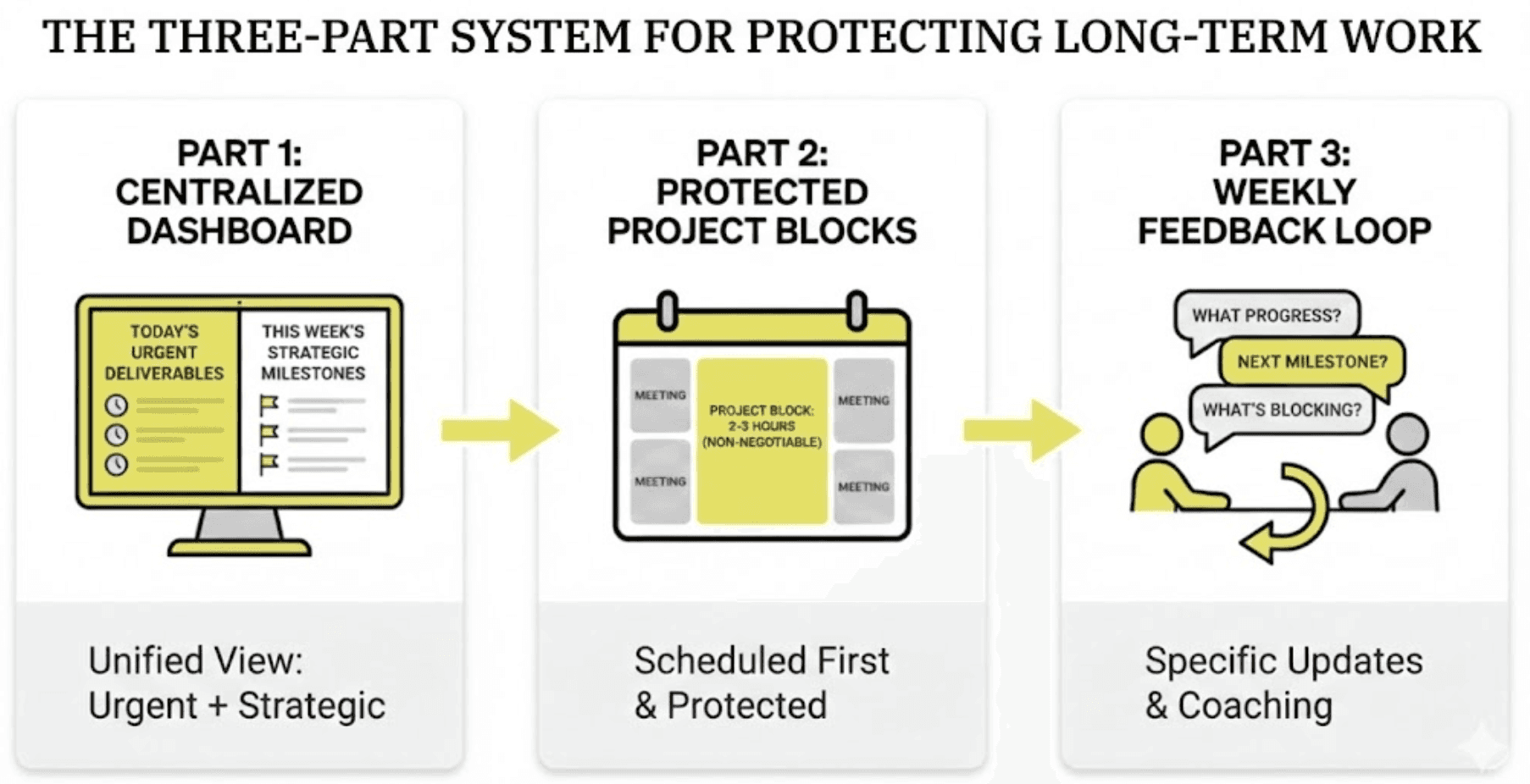
The Three-Part System for Protecting Long-Term Work
Part 1: The Centralized Dashboard
Your team needs ONE place that shows them everything due today and this week - both urgent client work AND their piece of that strategic project.
Most companies have project tasks living in some corner of their PM tool that nobody looks at. Then they wonder why nothing moves.
Build a dashboard view that pulls:
Today's deliverables (client work, urgent tasks)
This week's project milestones (strategic work)
Upcoming deadlines for both
When your team opens their day, they see both realities at once. The urgent stuff doesn't hide the important stuff anymore.
Part 2: Protected Project Blocks
Here's what nobody tells you about project work: it doesn't matter if the task exists if there's no time to do it.
Your team's calendar needs to reflect reality. And the reality is: strategic projects don't happen in the margins of Tuesdays at 4pm.
The fix: Recurring project blocks scheduled first, before anything else gets on the calendar.
Block 2-3 hours minimum, multiple times per week
Make it non-negotiable (like a client call would be)
All other meetings schedule around these blocks
Train your team to say: "I'm not available then, I'm scheduled to work on [project name]."
The specific project might change quarter to quarter. But the fact that project work happens during protected time never changes.
Part 3: The Weekly Feedback Loop
Projects die in silence.
Your weekly meetings probably cover: client deliverables, fires that got put out, upcoming deadlines. All short-term stuff.
Strategic projects? "Yeah, we're making progress" with zero specifics.
Change your meeting structure to require project updates:
What specific progress did you make this week?
What's your next milestone and when will it be done?
What's blocking you?
When someone says "I didn't get to it" - that's a coaching moment. Did they:
Schedule the time? (If not, do it now together)
Have the time but filled it with meetings? (Teach them to protect boundaries)
Get stuck and didn't ask for help? (Create better support systems)
The feedback loop catches stalls immediately instead of discovering in week 10 that nothing happened.
Here's what this actually looks like:
Imagine it's Monday morning. Your account manager opens her dashboard and sees:
3 client deliverables due this week (urgent)
Her assigned piece of the new onboarding system (important)
She looks at her calendar. There's a 3-hour project block on Wednesday morning. Nothing can move it - it's as sacred as a client call.
In Friday's team meeting, she reports: "I completed the client workflow mapping section of the onboarding system. Next milestone is building it in ClickUp by next Friday."
If she'd said "I didn't get to it," you'd know immediately. You'd ask what meeting took that Wednesday block, and you'd coach her through how to handle it differently next time.
That's the difference between project work that happens and project work that dies.
The bottom line:
Your quarterly goals aren't failing because your team doesn't care. They're failing because you haven't built the infrastructure that protects long-term work from short-term chaos.
A dashboard that surfaces both urgent and important work. Calendar blocks that make project time non-negotiable. Weekly feedback that catches stalls immediately.
That's the system.
If your team keeps missing quarterly goals despite good intentions, you don't need more motivation - you need better systems.
The dashboard, the calendar structure, the feedback loop - these aren't complicated. But implementing them across your entire team, getting everyone actually using them, and coaching through the inevitable resistance?
That's where most companies stall out.
We've built this exact system and many more for 100+ companies. We handle the setup, train your team, and make sure it actually sticks.
Book an ops assessment and we'll walk you through exactly how this would work for your business.
Let's make sure Q2 is different.
— Olivia
P.S. If you found this helpful, forward it to another business owner who's tired of quarterly goals that go nowhere. They can subscribe here.
